
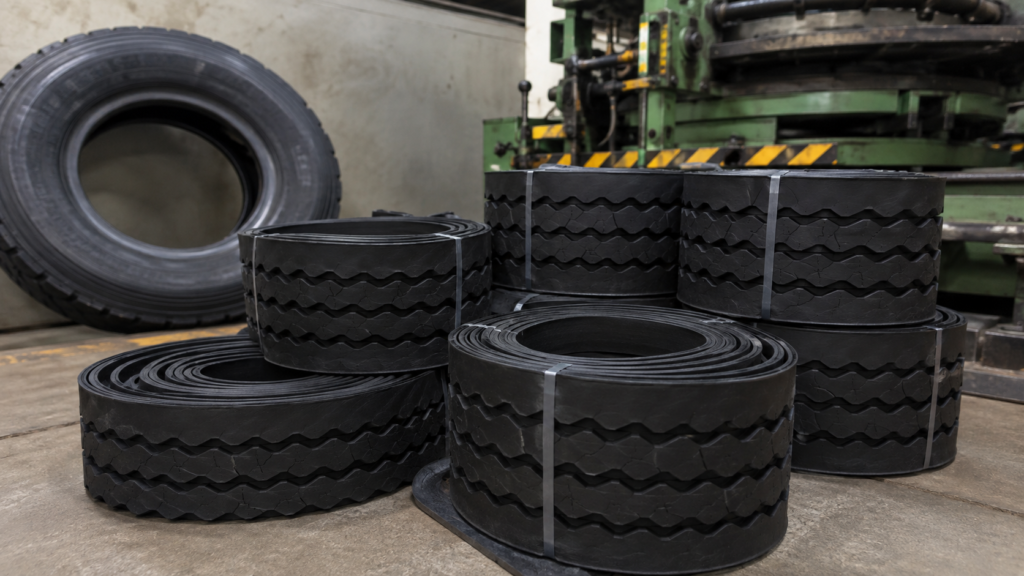
Commercial fleet owners, transporters, and bus operators know that tyre costs are one of the biggest recurring expenses in running a vehicle business. This is exactly where tread rubber for truck/bus tyres becomes a game-changer. Instead of replacing an entire tyre once the original tread wears out, retreading with high-quality tread rubber restores grip, extends tyre life, and significantly reduces operational costs — all while maintaining safety standards on the road.
In this comprehensive guide, we’ll explore what tread rubber is, the different types available, how it’s manufactured, what to look for when buying it, and why choosing the right supplier matters. Whether you run a transport fleet, operate a retreading unit, or are a tyre trader looking for a dependable rubber compound, this article will help you make an informed decision.
What Is Tread Rubber and Why It Matters for Commercial Tyres
Tread rubber is the specially formulated rubber compound bonded onto the worn casing of a truck or bus tyre during the retreading process. It forms the new outer layer that makes contact with the road, providing traction, load-bearing strength, and resistance to wear. For heavy commercial vehicles that clock thousands of kilometers every month, the quality of this rubber compound directly impacts fuel efficiency, braking performance, and overall road safety.
Unlike passenger vehicle tyres, truck and bus tyres are engineered to be retreaded multiple times over their service life. This makes the choice of tread rubber critical — a poor-quality compound can lead to premature tread separation, uneven wear, or reduced mileage, while a well-engineered tread rubber can rival the performance of a new tyre at a fraction of the cost.
Types of Tread Rubber Used for Truck and Bus Tyres
1. Precured Tread Rubber
Precured tread rubber is manufactured and vulcanized in advance, then bonded onto the buffed tyre casing using a cushion gum layer. This is the most widely used method for cold retreading because it offers consistent tread patterns, uniform gauge thickness, and faster turnaround time. It’s especially popular among fleet operators who need reliable, ready-to-fit tread designs for highway and city applications.
2. Camelback / Hot Retreading Rubber
Camelback rubber, used in the hot retreading process, is applied uncured onto the casing and then molded and cured together under heat and pressure. This method allows for custom tread patterns and is often preferred for off-road, mining, and specialized commercial vehicle tyres where a strong, integrated bond between the casing and tread is essential.
Key Benefits of High-Quality Tread Rubber
- Extended Tyre Life: A good tread compound can add thousands of additional kilometers to a tyre’s usable life.
- Cost Savings: Retreading with quality tread rubber costs significantly less than buying a brand-new tyre.
- Better Fuel Efficiency: Optimized rubber compounds reduce rolling resistance, helping fleets save on fuel.
- Enhanced Safety: Strong bonding and durable compounds reduce the risk of tread separation at high speeds.
- Eco-Friendly Choice: Retreading reduces rubber waste and the carbon footprint associated with manufacturing new tyres.
- Consistent Performance: Precision-engineered tread patterns ensure predictable handling and braking.
How Tread Rubber Is Manufactured
The production of premium tread rubber involves a carefully controlled process to ensure strength, elasticity, and durability:
- Compounding: Natural and synthetic rubber is blended with carbon black, curing agents, antioxidants, and other additives to achieve the desired properties.
- Mixing: The compound is thoroughly mixed in internal mixers to achieve uniform consistency and dispersion of ingredients.
- Extrusion: The mixed rubber is extruded into tread strips with the required tread pattern and gauge.
- Vulcanization/Curing: The extruded tread is cured under controlled heat and pressure to develop its final mechanical strength.
- Quality Testing: Each batch undergoes rigorous testing for tensile strength, abrasion resistance, and bonding capability before dispatch.
At Pal Rubber Industries, every batch of tread rubber goes through this stringent process to ensure consistent quality that fleet operators and retreaders can rely on.
Factors to Consider When Choosing Tread Rubber
Selecting the right tread rubber for your truck or bus tyres isn’t just about price. Consider these factors:
- Application Type: Highway, city, off-road, or mixed-use conditions require different tread compounds and patterns.
- Compound Quality: Look for rubber with high abrasion resistance and heat-build-up control.
- Bonding Strength: Poor bonding leads to tread separation — ask suppliers for bonding test data.
- Gauge Consistency: Uniform thickness ensures even wear and balanced performance.
- Certifications: Preference should be given to manufacturers following recognized industry and quality standards.
- Supplier Reliability: A trusted, experienced manufacturer ensures consistent supply and after-sales support.
You can browse our full range of retreading materials on our products page to compare options suited to your specific fleet requirements.
Tread Rubber and Tyre Retreading: Cost & Environmental Benefits
Retreading truck and bus tyres with quality tread rubber is not just an economic decision — it’s an environmentally responsible one too. According to industry data compiled by the Tire Retread & Repair Information Bureau, retreaded tyres use significantly less raw material and energy compared to manufacturing a brand-new tyre, making retreading a preferred sustainability practice for commercial fleets worldwide.
Quality standards for rubber compounds and tyre materials are also guided by international testing bodies such as ASTM International, which sets benchmark testing methods for tensile strength, abrasion, and durability of rubber products. In India, manufacturers also align with specifications published by the Bureau of Indian Standards (BIS) to ensure consistent product quality.
Why Choose Pal Rubber Industries for Tread Rubber
With years of hands-on experience in rubber compounding and manufacturing, Pal Rubber Industries has become a trusted name for businesses seeking dependable tread rubber for truck/bus tyres. Here’s what sets us apart:
- Precision-engineered rubber compounds tested for strength and longevity
- Wide range of tread patterns suited for highway, city, and mixed-service applications
- Consistent gauge thickness and reliable batch-to-batch quality
- Timely delivery and dedicated technical support for retreaders and fleet operators
- Competitive pricing without compromising on material quality
To learn more about our manufacturing standards and company background, visit our About Us page, or explore our complete product catalog on the Products section of our website.
Applications of Tread Rubber
Tread rubber manufactured for commercial vehicles is used across a wide variety of sectors, including:
- Long-haul trucking and logistics fleets
- State and private bus transport operators
- Construction and mining vehicle tyres
- Agricultural and industrial haulage vehicles
- Tyre retreading businesses and workshops
Conclusion
Choosing the right tread rubber for truck/bus tyres is one of the smartest decisions a fleet operator or retreader can make. It directly impacts safety, cost-efficiency, and the environmental footprint of your operations. Whether you need precured tread rubber for quick, reliable retreading or camelback rubber for specialized applications, quality should never be compromised.
Pal Rubber Industries has been manufacturing dependable, high-performance tread rubber that keeps commercial vehicles running longer, safer, and more efficiently. Our commitment to quality, consistency, and customer support makes us a preferred partner for transporters, retreaders, and tyre businesses across the country.
Get in Touch With Pal Rubber Industries
Looking for premium tread rubber for your truck or bus tyres? Our team is ready to help you find the right product for your fleet or retreading business. Reach out to us today for pricing, samples, and bulk order inquiries.
📞 Phone: +91 98710 01723
✉️ Email: contact@palrubberindustries.com
Frequently Asked Questions (FAQs)
1. What is tread rubber used for in truck and bus tyres?
Tread rubber is used to renew the outer layer of a worn truck or bus tyre during retreading, restoring grip, load-bearing capacity, and road performance without replacing the entire tyre.
2. What is the difference between precured and camelback tread rubber?
Precured tread rubber is pre-vulcanized and bonded onto the casing using cushion gum (cold process), while camelback rubber is uncured and cured together with the casing under heat and pressure (hot process).
3. How many times can a truck tyre be retreaded with quality tread rubber?
With a strong casing and high-quality tread rubber, commercial truck and bus tyres can typically be retreaded two to three times, depending on usage conditions and casing integrity.
4. Does retreading with tread rubber compromise tyre safety?
No. When done using quality tread rubber and proper bonding processes, retreaded tyres meet safety and performance standards comparable to new tyres, especially for commercial fleet applications.
5. How do I choose the right tread rubber supplier?
Look for a manufacturer with proven experience, consistent compound quality, strong bonding performance, and reliable delivery — such as Pal Rubber Industries, known for dependable tread rubber solutions.