
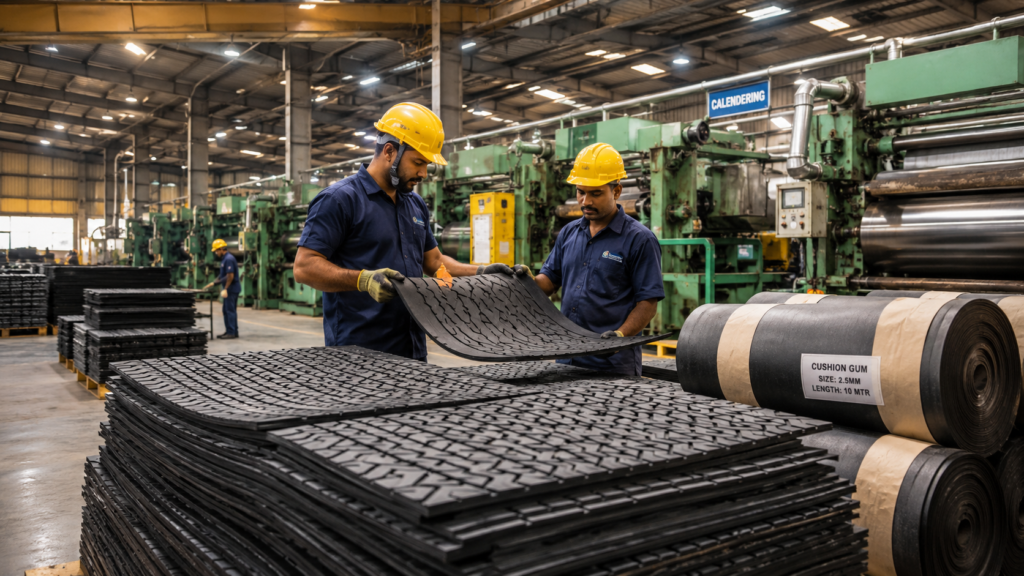
Tread rubber is one of those materials that quietly determines how well a retreaded tyre performs. Get the compound right, and a retread can run almost as long as a new tyre. Get it wrong, and a fleet operator ends up with uneven wear, poor grip, or worse. This guide walks through what tread rubber actually is, the types available, and what to look for when researching the best tread rubber company in India for your business.
What Is Tread Rubber and Why It Matters
Tread rubber is the layer bonded onto a worn tyre casing during the retreading process. It becomes the tyre’s new road-contact surface, so it directly affects grip, wear rate, heat build-up, and braking behavior. When the compound is inconsistent from batch to batch, the results are rarely minor — think uneven wear, weak adhesion, or in the worst cases, tread separation while a vehicle is moving.
This is why fleet operators and retreading units tend to treat supplier selection as seriously as any other safety-related purchase.
The Three Main Types of Tread Rubber
1. Precured Tread Rubber
This comes pre-vulcanized, with the tread pattern already moulded in. It’s bonded to a prepared casing using cushion gum, then cured inside an envelope under controlled heat and pressure. This is the standard approach for cold retreading.
2. Camelback Rubber
Used in hot retreading, camelback rubber is applied to the casing in its uncured state. Unlike precured rubber, the tread pattern only forms once the tyre goes through the mould-curing process.
3. Cushion Gum
This thin adhesive layer sits between the old casing and the new tread. It’s easy to overlook, but a weak or poorly formulated cushion gum is one of the leading causes of premature retread failure.
Manufacturers who produce all three components in-house generally maintain tighter quality control than those who source parts of their range from third parties.
What Quality Actually Looks Like in Tread Rubber
- Consistent compounding: Every batch should perform the same way, regardless of when it was produced.
- Alignment with recognized standards: Manufacturing practices should reflect relevant guidelines set by bodies like the Bureau of Indian Standards.
- Pre-shipment testing: Tensile strength, hardness, and abrasion resistance should be verified, not assumed.
- A range of tread patterns: Rib, lug, and mixed-service designs suited to different vehicle categories.
- Dependable delivery schedules: Stock delays can bring a retreading unit’s production to a halt.
- Genuine manufacturing experience: Compound formulation knowledge is built over years, not claimed overnight.
How to Evaluate a Supplier Before Placing a Bulk Order
- Request a sample batch and test it against your current material under actual working conditions.
- Ask for test reports covering tensile strength, elongation, and Shore A hardness.
- Confirm production capacity can support your order volume without delays.
- Understand their quality control process — how many checkpoints exist between raw material and finished product.
- Compare price against actual performance, not just the number on the quote.
- Ask how batch issues are handled if something doesn’t meet expectations.
- Check delivery timelines specific to your region before finalizing anything.
Common Mistakes Buyers Make
- Choosing based on price alone: Lower-cost material often means reduced rubber content, which shows up as faster wear later.
- Skipping the sample stage: Committing to a full bulk order without testing a trial batch first is a costly gamble.
- Using one compound for every vehicle type: Load-bearing trucks and lighter commercial vehicles need different formulations.
- Overlooking supply consistency: An unreliable delivery schedule can disrupt an entire retreading operation.
Where Pal Rubber Industries Fits Into This
Pal Rubber Industries manufactures precured tread rubber, camelback rubber, and cushion gum in-house, with compound formulation developed around Indian highway conditions, mixed climates, and continuous heavy-vehicle load. Buyers researching the best tread rubber company in India for their retreading operation can review the complete tread rubber and cushion gum product range, or read more about the manufacturing setup on the About Us page.
Useful References for Technical Buyers
- The ASTM International organization publishes test methods widely used for evaluating rubber material properties.
- The International Organization for Standardization (ISO) maintains global reference standards relevant to rubber and tyre-related products.
Conclusion
Choosing a tread rubber supplier is worth slowing down for. Compound quality, testing practices, and delivery reliability matter far more than a low quoted price, especially when the material affects road safety and vehicle performance. Buyers who request samples, review test data, and ask direct questions about the manufacturing process are far less likely to run into costly surprises later — which is ultimately what separates the best tread rubber company in India from an average one.
Have a Tread Rubber Requirement?
Reach out to Pal Rubber Industries for samples, bulk pricing, and technical support tailored to your business.
Frequently Asked Questions
1. What’s the difference between precured tread rubber and camelback rubber?
Precured tread rubber already has a moulded tread pattern and is used for cold retreading, while camelback rubber is uncured and only gets its pattern during the hot retreading mould process.
2. How can I verify a tread rubber supplier’s quality before ordering in bulk?
Request lab test data on tensile strength and abrasion resistance, ask for a sample batch to test independently, and confirm whether production includes quality checkpoints at multiple stages rather than just a final inspection.
3. Does the tread rubber compound really affect how long a retreaded tyre lasts?
Yes. Compound quality determines wear resistance, road grip, and how well the tread bonds to the casing, all of which directly influence how long the retreaded tyre lasts.
4. Can tread rubber be customized for different vehicle types or loads?
Yes, many manufacturers, including Pal Rubber Industries, offer custom compound formulations based on vehicle category, load requirements, and regional road conditions. It’s best to discuss your specific use case with the supplier’s technical team directly.
5. Is there a minimum order quantity for bulk tread rubber purchases?
Minimum order quantities differ by supplier and product type. Contact Pal Rubber Industries at +91 98710 01723 or contact@palrubberindustries.com for current MOQ details and bulk pricing based on your requirement.