
If you run a tyre retreading business, source materials for an OEM, or manage procurement for a fleet workshop, you’ve probably typed “precured tread rubber price in India” into Google more than once — and found wildly different numbers from different sellers. That’s not a coincidence. Precured tread rubber pricing isn’t a fixed number; it moves with raw material costs, compound quality, tread pattern design, and even the supplier’s manufacturing scale.
This guide breaks down exactly what drives the cost of precured tread rubber in India, what price ranges you can realistically expect in 2025, and how to avoid overpaying for underperforming material. Whether you’re buying in bulk for a retreading unit or sourcing a one-time batch, this article will help you make an informed, cost-effective decision.
What Is Precured Tread Rubber?
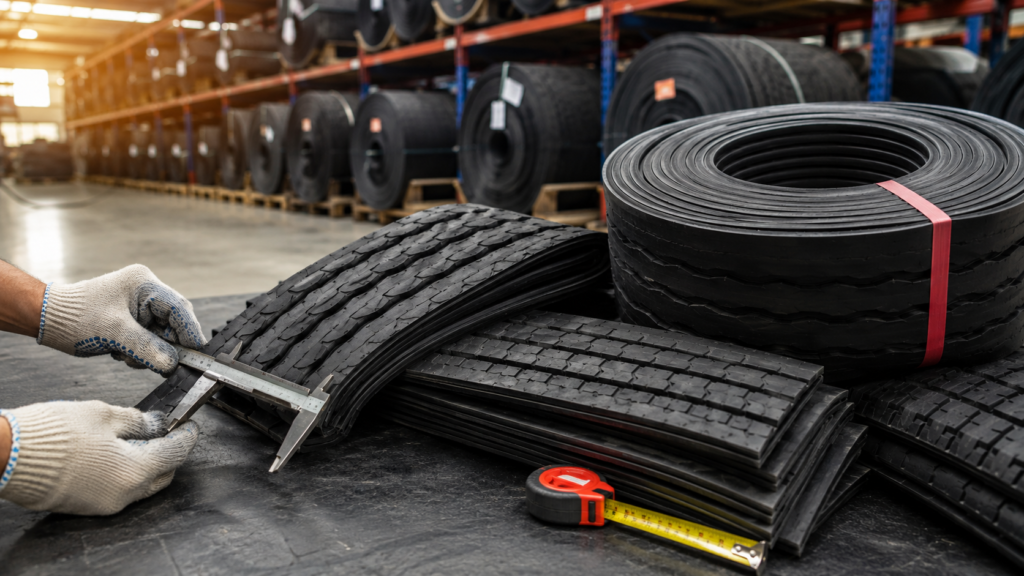
Precured tread rubber is a pre-vulcanized rubber strip with a ready-made tread pattern, used primarily in the cold retreading process for tyres. Instead of curing rubber directly onto a worn tyre casing (as in hot retreading), precured tread rubber is bonded onto the casing using a cushion gum compound and then cured in an autoclave at lower temperatures. This method is widely preferred because it preserves the tyre casing’s integrity and delivers better mileage.
Because this material directly affects tyre safety, load-bearing capacity, and road grip, buyers should never choose a supplier based on price alone. Understanding the underlying cost factors helps you evaluate whether a quoted price reflects genuine quality or corner-cutting.
7 Key Factors That Affect Precured Tread Rubber Price in India
1. Raw Material Quality (Natural vs. Synthetic Rubber Blend)
The rubber compound is the single biggest cost driver. High-grade natural rubber (NR) blended with quality synthetic rubber (SBR, BR) and reinforced with carbon black and silica offers better abrasion resistance and heat dissipation — but costs more. Cheaper tread rubber often uses a higher filler-to-rubber ratio, which reduces cost but also reduces tread life significantly.
2. Tread Pattern Design and Application
- Rib patterns — for highway/steer axle use, generally mid-range pricing.
- Lug patterns — for drive axles and off-road use, slightly higher due to deeper grooves and more rubber compound.
- All-position/mixed patterns — priced based on versatility and mold complexity.
Complex mold designs with deeper sipes and specialized grip patterns naturally cost more to manufacture and price higher per kg.
3. Thickness and Gauge of the Tread
Thicker tread gauge means more material used per meter, directly increasing weight-based pricing. Heavy commercial vehicle (HCV) tread rubber is thicker and denser than passenger car or two-wheeler tread rubber, which is reflected in the final quote.
4. Order Volume and Bulk Discounts
As with most manufactured goods, per-kg pricing drops significantly with bulk orders. A retreading unit ordering in bulk annually will typically negotiate a better rate than a one-time buyer purchasing a small batch.
5. Manufacturing Process and Quality Certifications
Manufacturers with ISO-certified production lines, in-house testing labs, and consistent quality control invest more in production but deliver longer-lasting, safer tread rubber. This is reflected in slightly higher — but justified — pricing compared to unbranded, uncertified sellers.
6. Raw Material Market Fluctuations
Natural rubber prices in India are influenced by monsoon output, international crude oil prices (which affect synthetic rubber and carbon black costs), and import duties. These macro factors cause tread rubber prices to fluctuate month to month, so it’s wise to check current rates rather than relying on outdated quotes.
7. Transportation and Regional Logistics
Freight costs from the manufacturing hub to your location add to the landed price, especially for buyers located far from major rubber manufacturing clusters in states like Punjab, Haryana, Kerala, and Tamil Nadu.
Current Precured Tread Rubber Price Range in India (2025)
While prices vary by supplier and specification, here’s a general indicative range based on current market conditions:
| Tread Rubber Type | Typical Price Range (per kg) |
|---|---|
| Standard passenger vehicle tread rubber | ₹190 – ₹230 |
| Light commercial vehicle (LCV) tread rubber | ₹220 – ₹260 |
| Heavy commercial/TBR tread rubber | ₹250 – ₹320 |
Note: Prices are indicative and subject to change based on raw material costs and order specifications. Contact Pal Rubber Industries for a current, accurate quote.
How to Choose the Right Precured Tread Rubber Supplier
Price should never be your only filter. Here’s a practical checklist:
- Ask for compound test reports — abrasion resistance, tensile strength, and heat build-up data.
- Check manufacturing certifications — ISO 9001 and BIS compliance where applicable.
- Request sample batches before committing to bulk orders.
- Evaluate after-sales support — technical guidance on bonding and curing matters as much as the product itself.
- Compare landed cost, not just quoted price — factor in freight, minimum order quantity, and payment terms.
You can browse our range of precured tread rubber products to compare specifications, or explore our full rubber product catalog for related materials like cushion gum and bonding solutions.
Why Buyers Choose Pal Rubber Industries
At Pal Rubber Industries, we manufacture precured tread rubber engineered for consistent performance across passenger, LCV, and heavy commercial vehicle applications. Our production process emphasizes:
- Consistent compound formulation batch after batch
- A wide range of tread patterns suited to different road and load conditions
- Transparent, volume-based pricing with no hidden costs
- Reliable pan-India dispatch and logistics support
To learn more about our manufacturing standards, visit our About Us page, or get in touch directly for a customized quote based on your specific volume and pattern requirements.
Get the Best Precured Tread Rubber Price Today
Reach out to Pal Rubber Industries for current pricing, technical specifications, and bulk order discounts.
📞 +91 98710 01723
✉️ contact@palrubberindustries.com
Frequently Asked Questions
1. What is the average precured tread rubber price per kg in India?
On average, prices range between ₹190 and ₹320 per kg depending on the vehicle segment, tread pattern, and order volume. Heavy commercial vehicle tread rubber tends to be priced higher due to thicker gauge and reinforced compounds.
2. Does precured tread rubber price vary by tread pattern?
Yes. Lug patterns and specialized off-road patterns typically cost more than standard rib patterns due to higher material usage and more complex mold design.
3. Is cheaper precured tread rubber a good deal?
Not always. Lower-priced tread rubber often uses a higher filler content and lower-grade rubber, which can reduce tread life and compromise safety. It’s important to balance price with compound quality and test reports.
4. How can I get an accurate quote for bulk orders?
The best way is to contact the manufacturer directly with your required tread pattern, thickness, and volume. You can reach Pal Rubber Industries at +91 98710 01723 or contact@palrubberindustries.com for a customized quote.
5. Does raw rubber price fluctuation affect final tread rubber cost?
Yes. Natural rubber and synthetic rubber prices fluctuate based on monsoon yield, crude oil prices, and import duties, which can cause tread rubber prices to shift month to month.
Conclusion
Precured tread rubber price in India isn’t governed by a single number — it’s shaped by compound quality, tread pattern, thickness, order volume, and market conditions. Rather than chasing the lowest quote, buyers should evaluate the total value: durability, safety certifications, and supplier reliability all factor into the true cost of ownership.
If you’re planning a bulk purchase or need guidance on which tread pattern and compound suit your fleet, Pal Rubber Industries is here to help. Our team can walk you through current pricing, technical specifications, and delivery timelines tailored to your business.
📞 Call us at +91 98710 01723 or email contact@palrubberindustries.com to get your personalized precured tread rubber quote today.
References:
Rubber Board of India |
ISO 9001 Quality Management Standards |
Tyre Retreading Industry Resources