
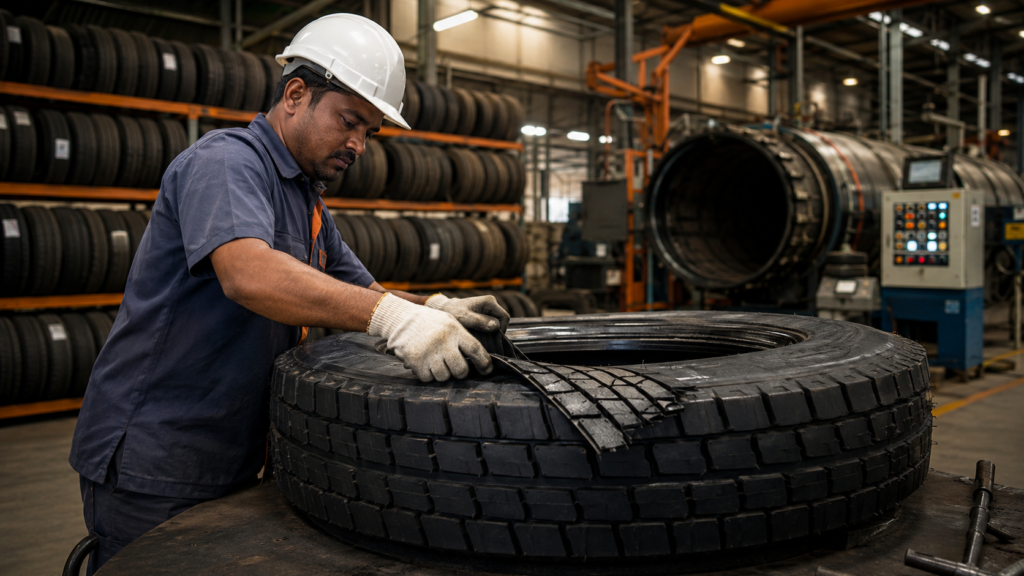
India’s road transport sector runs on wheels — quite literally — and tyres represent one of the largest recurring costs for fleet owners, logistics companies, and individual truck operators. As raw material prices rise and sustainability becomes a business priority, Tyre Retreading Solutions in India have emerged as a practical, economical, and eco-friendly alternative to buying new tyres every time tread wears out. In this comprehensive guide, we explore the materials, process, and benefits of tyre retreading, and why more Indian businesses are turning to trusted manufacturers like Pal Rubber Industries for dependable retreading products.
What Is Tyre Retreading?
Tyre retreading is a manufacturing process in which a worn-out tyre’s old tread is removed and replaced with a new layer of rubber, restoring the tyre to a condition suitable for continued use. Because the tyre casing (carcass) — the most expensive and resource-intensive part of a tyre — is reused, retreading significantly reduces material consumption while extending the tyre’s operational life. This makes it an essential practice for commercial vehicles, buses, trucks, and even aircraft, where tyre costs directly impact operating margins.
Why Tyre Retreading Matters in India
India has one of the largest commercial vehicle fleets in the world, and with rising fuel and raw material costs, fleet operators are constantly looking for ways to cut expenses without compromising safety. Tyre retreading addresses this need directly. According to industry data referenced by the Ministry of Road Transport and Highways, commercial vehicle operating costs are heavily influenced by tyre expenditure, making retreading a financially strategic choice for logistics-heavy industries such as mining, agriculture, construction, and public transport.
Materials Used in Tyre Retreading
The quality of a retreaded tyre depends heavily on the materials used during the process. Here are the primary materials involved:
1. Precured Tread Rubber
Precured tread rubber is the most widely used material in modern retreading. It is manufactured and vulcanized in advance, then bonded onto the prepared tyre casing using a cushion gum layer. This method, known as cold retreading, offers precision, consistency, and superior durability. Pal Rubber Industries specializes in high-grade precured tread rubber engineered for Indian road and load conditions.
2. Cushion Gum (Bonding Gum)
Cushion gum is an uncured rubber compound applied between the tyre casing and the precured tread. It acts as an adhesive layer that bonds during the curing process, ensuring strong adhesion and preventing tread separation during use.
3. Camelback Rubber
Used primarily in the hot retreading process, camelback rubber is an uncured rubber compound applied directly onto the buffed tyre casing before being vulcanized in a mould under heat and pressure.
4. Bonding Solutions and Sealants
Specialized rubber cement and bonding solutions are used to prepare the tyre surface, ensuring proper adhesion between the casing and new tread material.
5. Repair Materials
Before retreading, damaged sections of the casing — such as punctures or small cuts — are repaired using rubber patches, plies, and vulcanizing compounds to restore structural integrity.
The Tyre Retreading Process: Step-by-Step
Whether performed through the cold or hot process, tyre retreading follows a systematic sequence of steps to ensure safety and performance. Here is a numbered breakdown of the standard process:
- Initial Inspection: Every tyre casing undergoes a thorough visual and mechanical inspection to check for structural damage, sidewall cracks, or internal separations that would make it unfit for retreading.
- Shearography or X-Ray Testing: Advanced facilities use non-destructive testing methods to detect hidden defects inside the casing before proceeding further.
- Buffing: The old, worn tread is removed and the casing surface is buffed to the correct radius and texture, preparing it for new rubber application.
- Repairing: Any punctures, cuts, or minor damages identified during inspection are repaired using rubber compounds and reinforcing plies.
- Cementing: A thin layer of rubber cement is applied to the buffed surface to improve adhesion of the new tread material.
- Tread Application: Precured tread rubber (cold process) or camelback compound (hot process) is applied evenly around the tyre casing.
- Curing/Vulcanization: The tyre is placed into an envelope and autoclave (cold process) or a mould press (hot process), where heat and pressure bond the new tread permanently to the casing.
- Final Inspection and Quality Check: The finished retreaded tyre is inspected for tread uniformity, balance, and safety compliance before being approved for use.
Cold Process vs Hot Process Retreading
- Cold Retreading: Uses precured tread rubber; ideal for radial tyres, offers consistent tread pattern quality, and is widely preferred for highway and long-distance commercial vehicles.
- Hot Retreading: Uses camelback rubber cured in a mould; commonly used for off-road, mining, and heavy-load applications where custom tread patterns are required.
Key Benefits of Tyre Retreading Solutions in India
Choosing professional Tyre Retreading Solutions in India offers a wide range of advantages for fleet owners, transport companies, and individual vehicle operators:
- Cost Savings: Retreading can cost significantly less than purchasing a brand-new tyre, directly reducing fleet operating expenses.
- Environmental Sustainability: Retreading reduces the volume of scrap tyres sent to landfills and conserves natural rubber, crude oil, and other raw materials needed for new tyre manufacturing.
- Extended Tyre Life: A single casing can often be retreaded multiple times, maximizing the value of the original investment.
- Reliable Performance: When done with quality materials and proper process control, retreaded tyres offer performance comparable to new tyres for many commercial applications.
- Resource Conservation: Retreading uses considerably less crude oil and raw rubber compared to manufacturing a new tyre from scratch.
- Support for Local Industry: Retreading strengthens India’s domestic rubber processing industry and creates skilled employment opportunities.
Applications of Retreaded Tyres
Retreaded tyres are widely used across multiple sectors in India, including:
- Commercial trucks and heavy goods vehicles
- State transport and private bus fleets
- Mining and construction equipment
- Agricultural vehicles and tractors
- Airport ground support and industrial vehicles
Quality Standards and Safety Compliance
Reputable retreading manufacturers follow standards set by recognized bodies to ensure product safety and reliability. In India, the Bureau of Indian Standards (BIS) lays down specifications for retreading materials, while international frameworks referenced by organizations like the International Organization for Standardization (ISO) guide quality benchmarks for rubber compounds used in retreading. Choosing a manufacturer that adheres to these standards ensures consistent performance and road safety.
Why Choose Pal Rubber Industries for Tyre Retreading Solutions in India
With years of expertise in rubber compounding and tyre retreading materials, Pal Rubber Industries is a trusted name for businesses seeking dependable, high-performance retreading solutions across India. Our product range includes premium precured tread rubber, cushion gum, bonding solutions, and repair materials engineered for durability under Indian road and climate conditions.
We invite you to explore our full product catalogue or learn more about our manufacturing standards and company background to understand why fleet owners and retreaders across the country rely on us.
Need reliable tyre retreading materials for your business? Contact Pal Rubber Industries today for product inquiries, bulk orders, and technical support.
📞 Phone: +91 98710 01723 | ✉️ Email: contact@palrubberindustries.com
Conclusion
Tyre retreading has become an indispensable part of India’s transport and logistics ecosystem, offering a smart balance between cost efficiency, performance, and environmental responsibility. By understanding the materials involved, the step-by-step process, and the wide-ranging benefits, businesses can make informed decisions about incorporating retreaded tyres into their fleet management strategy. With growing emphasis on sustainability and cost control, Tyre Retreading Solutions in India are set to play an even larger role in the years ahead — and partnering with an experienced manufacturer like Pal Rubber Industries ensures you get quality materials backed by technical expertise.
Frequently Asked Questions (FAQs)
1. What is the difference between cold and hot tyre retreading?
Cold retreading uses precured tread rubber bonded onto the casing and cured at lower temperatures, making it ideal for radial and highway tyres. Hot retreading uses uncured camelback rubber, which is moulded and cured under heat and pressure, and is often used for custom tread patterns on off-road and heavy-duty tyres.
2. How many times can a tyre be retreaded?
Depending on the condition of the casing and the quality of the original tyre, a commercial tyre casing can typically be retreaded two to three times, provided it passes inspection and testing before each retreading cycle.
3. Are retreaded tyres safe for highway use?
Yes, when manufactured using quality-tested materials and following proper inspection and curing procedures, retreaded tyres are safe and widely used by commercial fleets, state transport corporations, and logistics companies across India.
4. How much can businesses save by choosing tyre retreading over new tyres?
While actual savings vary based on tyre size, casing condition, and material quality, retreading generally costs a fraction of a new tyre’s price, making it a financially attractive option for fleet operators managing multiple vehicles.
5. Where can I buy quality tyre retreading materials in India?
Pal Rubber Industries supplies premium-grade precured tread rubber, cushion gum, and bonding materials for tyre retreading businesses across India. You can contact us at +91 98710 01723 or email contact@palrubberindustries.com to discuss your requirements.