
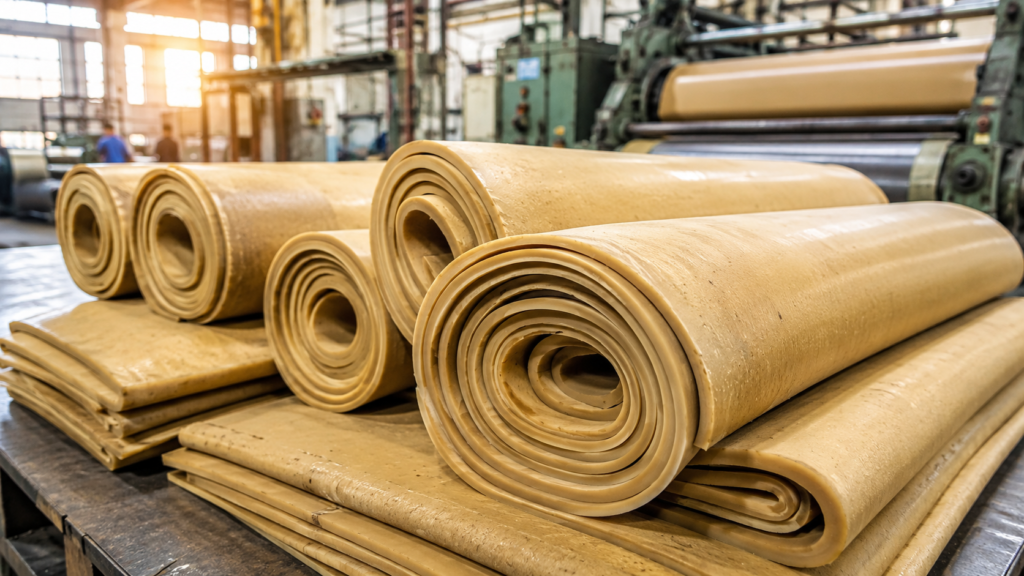
If you manufacture footwear, retread tyres, or work with industrial rubber components, you have probably searched for the right cushion gum India price more than once. Unlike commodities with a fixed rate card, cushion gum pricing shifts based on raw materials, manufacturing quality, order size, and even seasonal demand. This guide breaks down exactly what drives the cost so you can budget accurately and buy smarter.
At Pal Rubber Industries, we manufacture and supply premium-grade cushion gum sheets to businesses across India. This article draws on our first-hand manufacturing experience to give you a transparent, practical understanding of pricing — without the industry jargon.
What Is Cushion Gum and Why Does It Matter?
Cushion gum is an unvulcanized rubber compound sheet primarily used as a bonding and cushioning layer in tyre retreading, footwear soling, and various rubber-molded products. It acts as an adhesive interlayer that improves flexibility, shock absorption, and bonding strength between rubber layers. Because of its critical structural role, the quality of cushion gum directly affects the durability and safety of the final product — which is exactly why price and quality need to be evaluated together, not separately.
If you’re new to rubber compounds, our detailed product range page explains the different rubber sheet types we manufacture, including cushion gum, and where each is best applied.
Average Cushion Gum India Price: What to Expect
Cushion gum pricing in India is not a flat number — it is typically quoted per kilogram or per sheet, depending on the supplier and order specifications. Prices fluctuate based on rubber compound composition, sheet thickness, and current raw material market rates. Rather than relying on a generic figure that may already be outdated by the time you read this, we recommend requesting a live, customized quote so you get pricing that reflects current raw material costs and your specific order requirements.
You can request an updated price list anytime by calling us at +91 98710 01723 or emailing contact@palrubberindustries.com.
Key Factors That Affect Cushion Gum Price in India
Understanding these cost drivers will help you compare quotes intelligently instead of simply choosing the lowest number on paper.
1. Raw Material Quality and Rubber Compound
The single biggest price driver is the quality of natural or synthetic rubber used in the compound. Higher-grade rubber with better tensile strength and bonding properties costs more to source but results in a longer-lasting, more reliable product. Cheaper compounds may lower upfront cost but can lead to premature product failure — an expensive trade-off in the long run.
2. Sheet Thickness and Gauge
Cushion gum is typically available in varying thicknesses depending on the application — thinner gauges for footwear and thicker gauges for tyre retreading. Naturally, thicker sheets require more raw material per unit area, which increases the per-kg or per-sheet cost.
3. Order Volume and Bulk Discounts
As with most manufactured goods, buying in bulk reduces the effective per-unit price. Manufacturers can optimize production runs and reduce overhead costs when fulfilling larger orders, and these savings are often passed on to the buyer.
4. Manufacturing Process and Technology
Modern calendaring and mixing equipment produces more consistent sheet quality with fewer defects. Manufacturers who invest in updated machinery may charge slightly more, but the consistency translates into fewer rejections and better performance for your end product.
5. Transportation and Logistics
Since cushion gum is often shipped in bulk rolls, delivery distance, packaging requirements, and freight costs can add to the final landed price — particularly for buyers located far from the manufacturing hub.
6. Market Demand and Raw Rubber Prices
Natural rubber prices in India fluctuate based on monsoon output, global commodity trends, and domestic demand cycles. Since cushion gum is rubber-intensive, its price tends to move in line with these broader raw material trends.
How to Get the Best Cushion Gum Price Without Compromising Quality
Here are practical steps buyers can take to secure fair, competitive pricing:
- Buy directly from manufacturers instead of multiple middlemen layers
- Request samples before committing to a large order
- Ask for a detailed compound specification sheet, not just a price quote
- Compare cost-per-performance rather than cost-per-kg alone
- Negotiate long-term supply agreements for consistent bulk pricing
Step-by-Step: How to Evaluate a Cushion Gum Supplier’s Quote
- Check the compound specification — ask for tensile strength, elongation, and bonding data.
- Confirm the thickness tolerance — inconsistent gauge often signals lower manufacturing standards.
- Request a sample batch — test bonding and flexibility before a bulk purchase.
- Compare landed cost — factor in freight, packaging, and delivery timelines, not just base price.
- Verify manufacturing credentials — an established manufacturer typically offers more consistent quality control.
Our About Us page shares more on our manufacturing standards and quality control process, so you can see exactly how we maintain consistency across every batch.
Cushion Gum Applications Across Industries
Cushion gum’s versatility is one reason demand — and therefore pricing dynamics — varies across sectors:
- Footwear manufacturing: Used as a bonding layer between soling components for better flexibility and grip.
- Tyre retreading: Acts as a cushioning interlayer between the old tyre casing and new tread rubber.
- Industrial rubber lining: Provides shock absorption in conveyor systems and machinery components.
- General rubber molding: Used as an intermediate bonding layer in various molded rubber goods.
Why Choose Pal Rubber Industries for Cushion Gum in India?
With years of hands-on manufacturing expertise, Pal Rubber Industries has built a reputation for consistent quality, transparent pricing, and reliable delivery timelines. We work closely with footwear manufacturers, tyre retreaders, and industrial buyers across India to supply cushion gum that meets exact specification requirements — not generic, one-size-fits-all sheets.
Explore our complete contact and inquiry page to discuss your requirements directly with our technical team.
Industry Standards and Further Reading
For readers who want to explore broader industry context around rubber compounds and pricing trends, these authoritative resources are useful references:
- Rubber Board of India — official data on natural rubber production and pricing trends
- Bureau of Indian Standards (BIS) — quality and specification standards for rubber products
- India Briefing — insights on India’s manufacturing and industrial material markets
Conclusion
The cushion gum India price you’re quoted depends on far more than a single number — it reflects raw material quality, thickness, manufacturing standards, order volume, and logistics. Rather than chasing the cheapest quote, focus on value: consistent quality, reliable supply, and transparent communication from your manufacturer. That approach protects your production line and your bottom line in the long run.
Get a Custom Cushion Gum Quote Today
Looking for competitively priced, high-quality cushion gum for your business? Pal Rubber Industries is ready to help with custom specifications, bulk pricing, and fast delivery across India.
📞 Call us: +91 98710 01723
✉️ Email us: contact@palrubberindustries.com
Frequently Asked Questions (FAQs)
1. What is the average cushion gum price in India?
Cushion gum prices in India vary based on thickness, grade, and order quantity. Since raw material costs fluctuate, it’s best to request a customized quote based on your specifications from a trusted supplier like Pal Rubber Industries.
2. Why does cushion gum price vary between suppliers?
Price differences come from variations in raw rubber quality, compound formulation, manufacturing technology, thickness, order volume, and the level of after-sales service offered.
3. Is thicker cushion gum always more expensive?
Generally, yes — thicker sheets use more raw material. However, quality grade and application also influence pricing, so thickness alone shouldn’t be your only comparison factor.
4. Where is cushion gum used in India?
Cushion gum is widely used in footwear manufacturing, tyre retreading, industrial rubber lining, and various molded rubber component applications across Indian industries.
5. How can I get the best cushion gum price for bulk orders?
Buying directly from a manufacturer, ordering in bulk, and building a long-term supplier relationship typically results in better pricing. Contact Pal Rubber Industries directly for a competitive bulk quote.